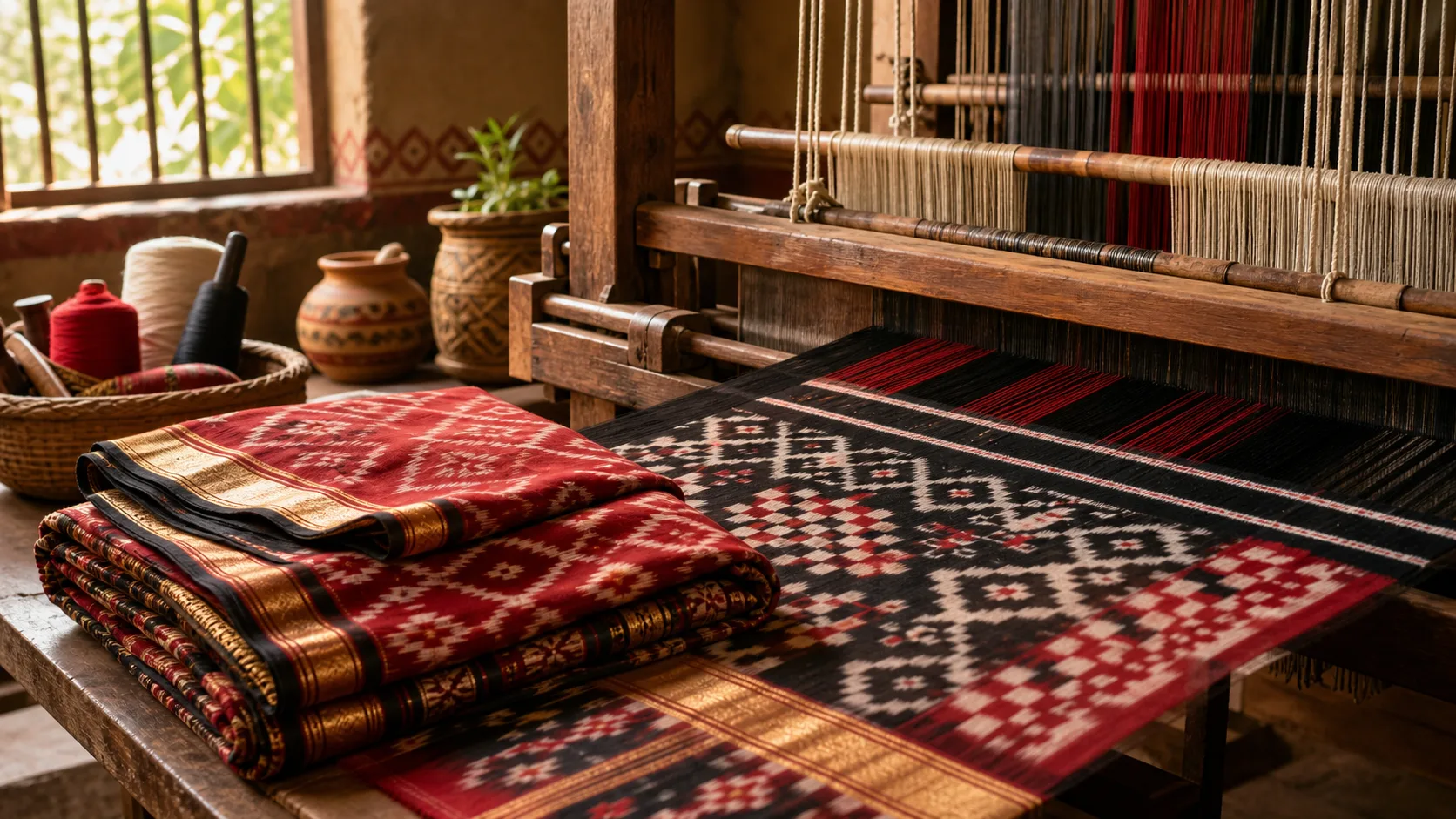
The beauty of a Sambalpuri saree is not only in color. It is in meaning.
Many Sambalpuri motifs come from ritual objects, nature, games, temple forms, and everyday life in Odisha. When woven through ikat, these motifs become both pattern and memory.
Shankha: The Conch
The shankha, or conch, is associated with auspiciousness and sacred sound. In saree design, it often appears in borders or repeated panels.
Chakra: The Wheel
The chakra suggests movement, dharma, and cosmic order. In Odisha textiles, it can also visually echo temple and ritual symbolism.
Phula: The Flower
Floral motifs soften the geometry of ikat. They may represent beauty, fertility, celebration, or simply the abundance of nature.
Pasapali
Pasapali is one of the most recognizable Sambalpuri patterns, known for its chessboard-like arrangement. It is graphic, bold, and instantly identifiable.
Fish, Deer, and Elephant
Animal motifs connect the saree to ecological and cultural memory. Fish can suggest fertility and water. Deer and elephant motifs often bring grace, strength, and regional storytelling into the textile.
Temple Borders
Temple-inspired borders give the saree architectural rhythm. They frame the body and pallu like a sacred threshold.
Why Motifs Matter When Buying
Understanding motifs helps you buy with intention. A saree is no longer just "red and black" or "cotton ikat." It becomes a textile with symbols, region, and story.
Final Thought
In a Sambalpuri saree, motifs do not sit on the cloth. They are born with the cloth, planned in the yarn before weaving begins.