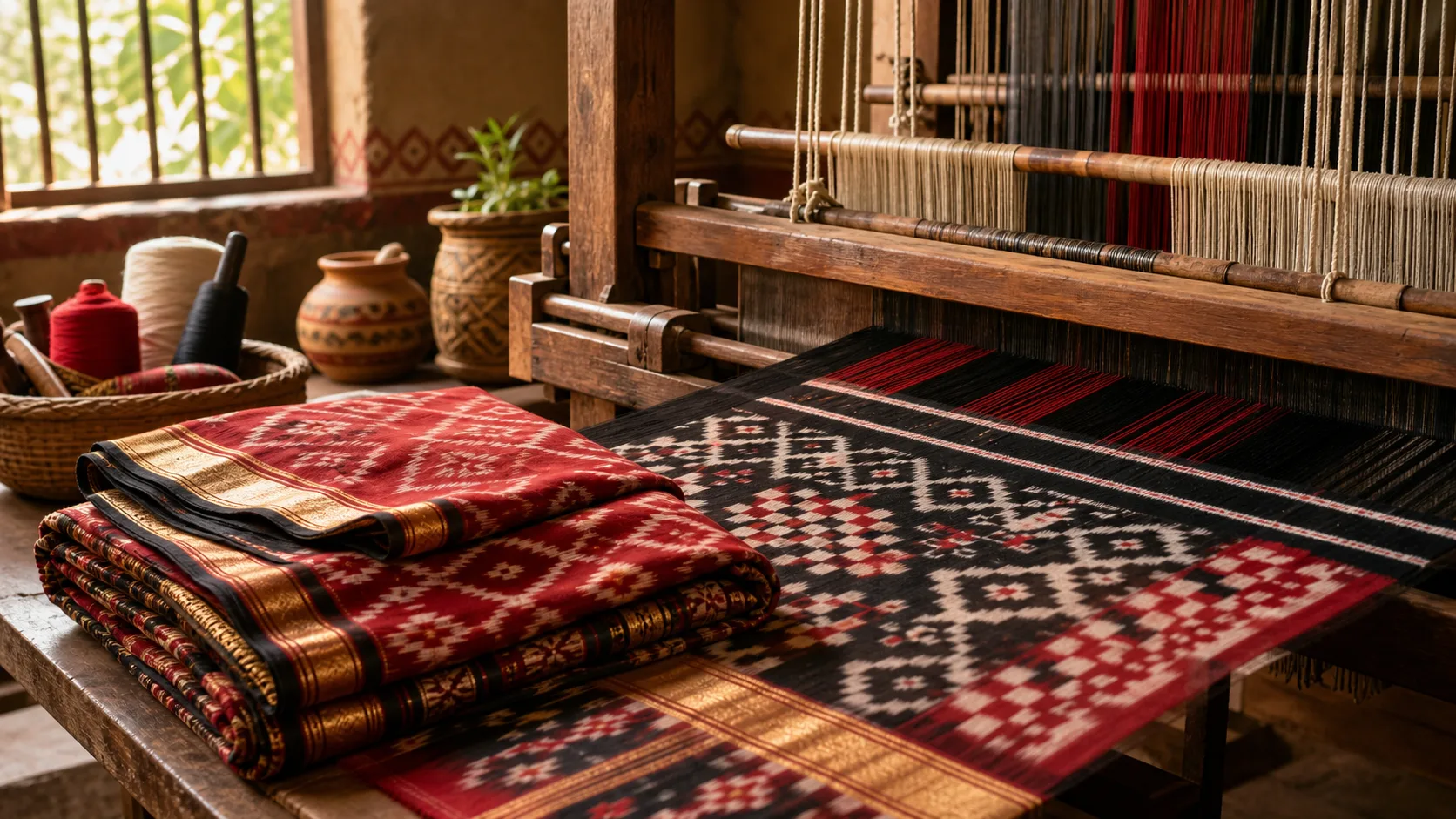
Few Odisha handloom patterns are as instantly recognizable as Pasapali.
With its chessboard-like arrangement, strong contrast, and rhythmic geometry, Pasapali has become a signature visual language within Sambalpuri ikat.
What Is Pasapali?
Pasapali refers to a checked pattern inspired by the traditional game of pasa. In sarees, it often appears as a bold grid of contrasting colors, sometimes combined with floral, conch, or wheel motifs.
Why Pasapali Is Popular
Pasapali works because it is both traditional and modern. The geometry feels ancient, but the graphic contrast makes it easy to style today.
It can be minimal in two colors or rich with border and pallu detailing.
Cotton or Silk Pasapali?
Cotton Pasapali is excellent for daily wear and office looks. Silk Pasapali feels more formal and can work beautifully for festivals, receptions, and cultural events.
Styling Pasapali
Keep the blouse simple if the saree has a strong check pattern. Black, red, ivory, mustard, or deep green blouses often work well depending on the body color.
Silver jewelry makes Pasapali look earthy. Gold jewelry makes it more festive.
Authenticity Checks
Look for the same pattern structure on the reverse side. Check whether the motif edges show ikat feathering. Avoid flat printed copies sold as "Pasapali print handloom."
Who Should Buy Pasapali?
Buy Pasapali if you want a saree that is:
- Strongly identifiable as Sambalpuri
- Graphic and easy to style
- Traditional without feeling old-fashioned
- Suitable in both cotton and silk
Final Thought
Pasapali proves that geometry can carry emotion. A grid becomes memory when it is tied, dyed, and woven by hand.