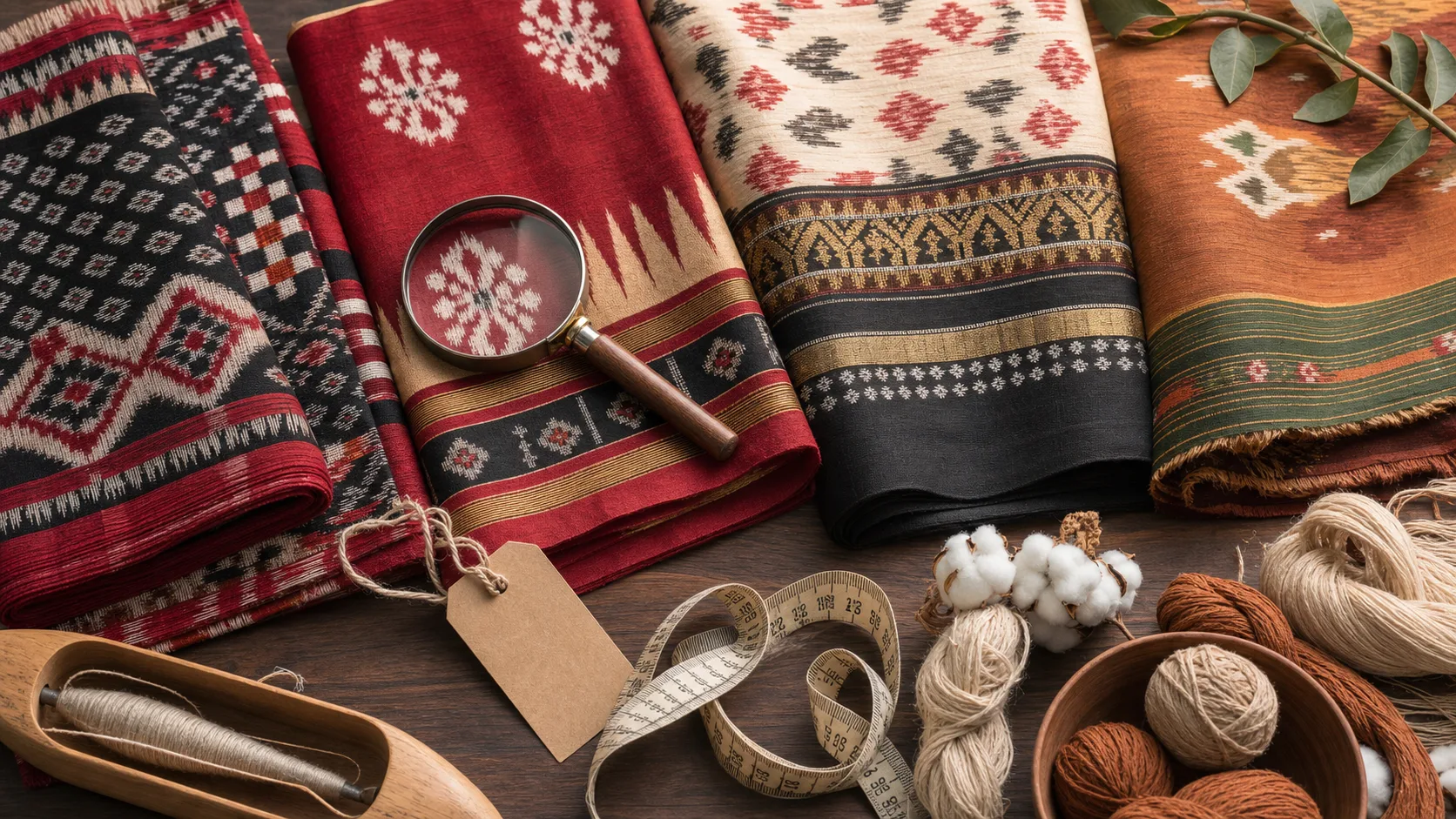
Odisha handloom sarees are made slowly. They should be cared for slowly too.
Whether you own Sambalpuri, Khandua, Bomkai, Kotpad, Berhampuri Pata, or Pattachitra, the basic rule is the same: avoid harsh treatment.
Washing Cotton Handloom
Use cold water and mild detergent. Wash separately, especially the first few times. Do not wring aggressively. Press water out gently and dry in shade.
Washing Silk Handloom
Dry-cleaning is safest for expensive silk sarees. If you hand-wash silk, use very mild soap, cold water, and minimal movement. Never scrub the border or pallu.
Drying
Always dry in shade. Direct sunlight can fade natural dyes, weaken silk, and dull rich colors.
Ironing
Iron on the reverse side. Use medium heat for cotton and low heat for silk. For delicate or painted sarees, place a cotton cloth between the iron and the fabric.
Storage
Store in muslin or cotton cloth. Avoid plastic. Keep in a dry place with airflow. Refold every few months so permanent creases do not form.
Stain Prevention
Perfume, makeup, oil, and food stains can be difficult to remove from handloom. Apply perfume before draping. Keep heavy jewelry from catching in the weave.
Saree-Specific Notes
- Sambalpuri: protect color and ikat edges
- Khandua: protect silk and ceremonial borders
- Bomkai: protect extra detailing on pallu and border
- Kotpad: treat natural dyes gently
- Pattachitra: avoid washing painted sections
Final Thought
The goal is not to keep a handloom saree untouched. The goal is to let it age beautifully.