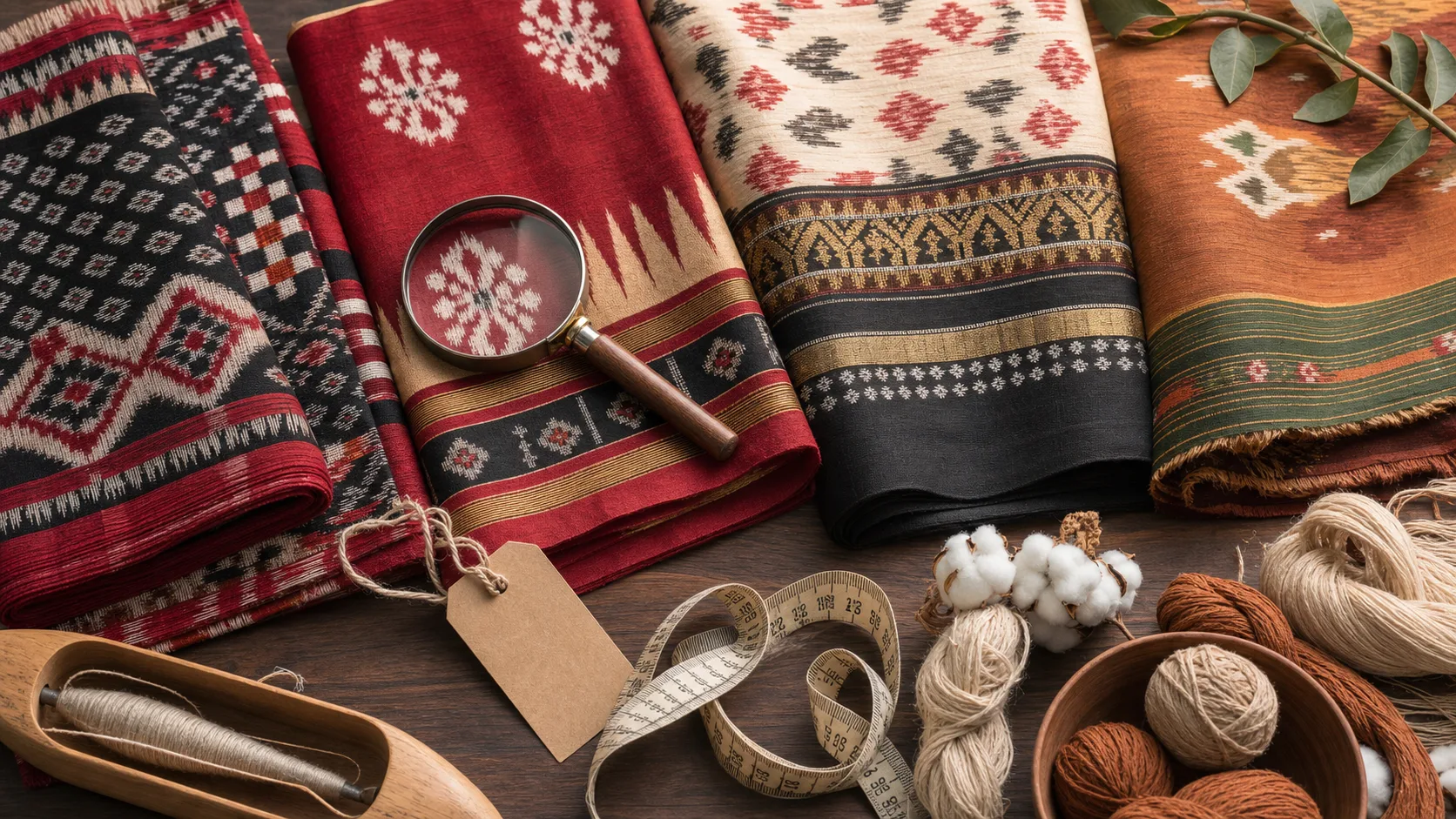
Not every handloom announces itself with shine. Kotpad sarees speak softly through earth tones, cotton texture, and natural dye tradition.
Kotpad is associated with the Koraput region of Odisha and is known for its understated beauty. The colors are often drawn from natural dye processes, especially deep rust, brown, maroon, and black tones.
What Makes Kotpad Special?
Kotpad sarees are loved for:
- Natural-dyed cotton
- Earthy red, brown, and black palettes
- Tribal-inspired motifs
- Breathable everyday comfort
- Minimalist, grounded elegance
Unlike glossy occasion sarees, Kotpad has a quiet intelligence. It works beautifully for people who prefer handloom that feels organic rather than ornate.
The Role of Natural Dye
Kotpad textiles are often associated with natural dyeing using aal, a plant-based source that gives rich reddish-brown shades. Natural dye processes take time and skill, and the final color has depth that synthetic flatness cannot imitate.
Who Should Buy a Kotpad Saree?
Choose Kotpad if you like:
- Sustainable textile stories
- Muted colors
- Cotton sarees for daily wear
- Tribal and rural craft aesthetics
- Sarees that age gracefully
Styling Kotpad
Kotpad pairs well with silver jewelry, wooden bangles, linen blouses, and simple sandals. It does not need heavy styling. Its strength is restraint.
How to Care for Kotpad
Wash gently in cold water. Dry in shade. Avoid harsh detergent and long soaking. Natural-dyed textiles deserve patience, especially in the first few washes.
Kotpad vs Sambalpuri Cotton
Sambalpuri cotton is often more graphic because of ikat motifs. Kotpad is more earthy and minimal. Both are excellent daily-wear handlooms, but the mood is different.
Final Thought
Kotpad is not loud luxury. It is slow luxury: breathable, grounded, natural, and deeply connected to place.