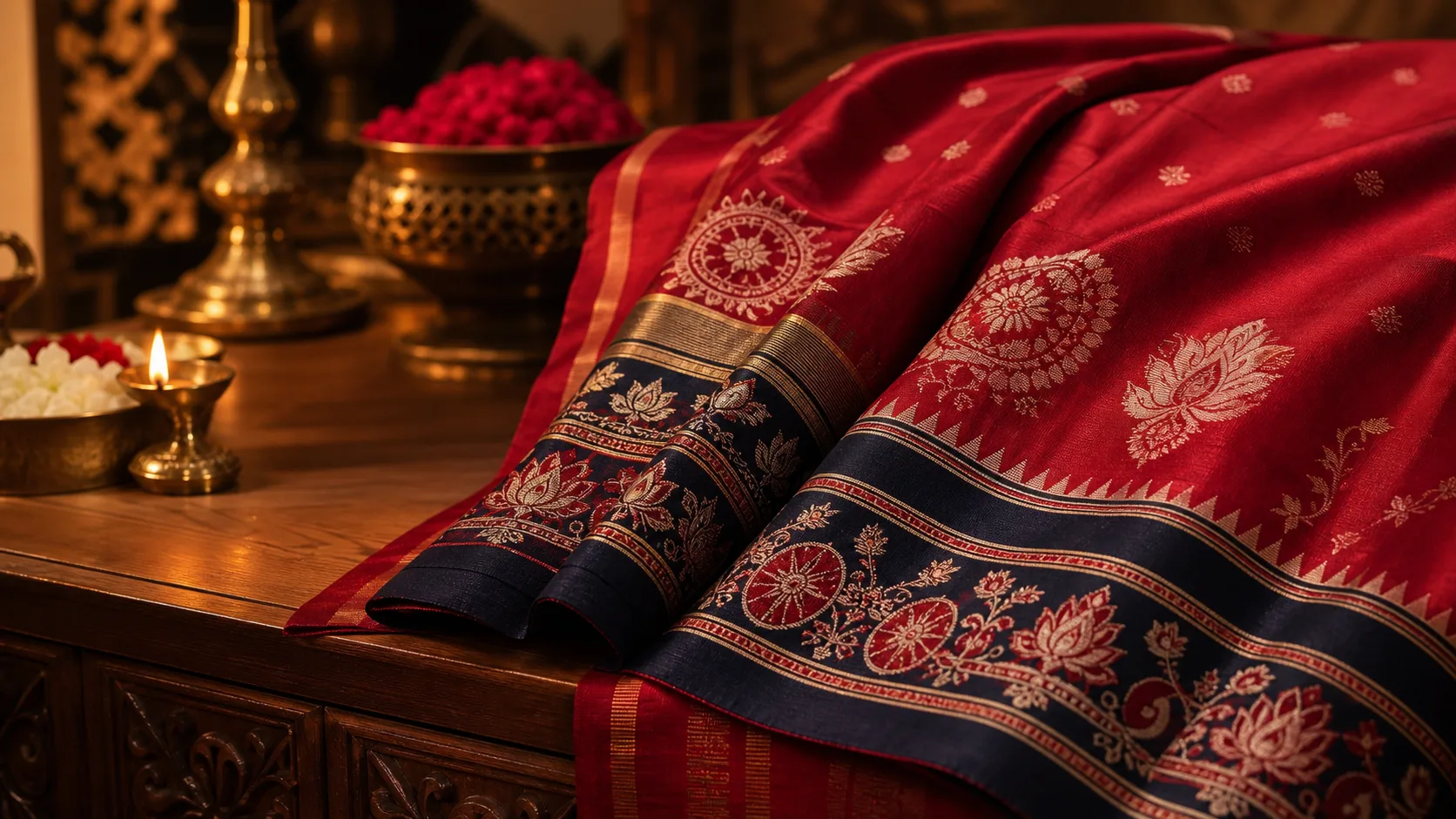
Khandua and Sambalpuri sarees are often mentioned together because both belong to Odisha's handloom heritage. But they are not the same saree.
Understanding the difference helps you buy better, style better, and appreciate the craft more deeply.
Quick Difference Table
| Feature | Khandua Saree | Sambalpuri Saree |
|---|---|---|
| Main association | Nuapatna, temple tradition, weddings | Western Odisha, ikat heritage |
| Common fabric | Silk, especially ceremonial silk | Cotton, silk, and blends |
| Motifs | Temple, lotus, chakra, conch, devotional forms | Pasapali, conch, wheel, flowers, animals, geometry |
| Occasion | Bridal, puja, temple, formal ceremony | Daily, festive, wedding, collectible |
| Visual mood | Sacred, auspicious, refined | Graphic, rhythmic, cultural, versatile |
What Is Khandua Known For?
Khandua is closely connected with Odisha's ritual and wedding culture. It is especially associated with Nuapatna and the textile traditions around Lord Jagannath. Deep reds, maroons, saffron tones, and dark contrast borders are common.
Khandua often feels ceremonial. It is a natural choice for an Odia bride, religious functions, or heirloom gifting.
What Is Sambalpuri Known For?
Sambalpuri sarees are known for their bandha or ikat technique, where yarns are tied and dyed before weaving. The result is a design that appears from the alignment of threads, not from printing after weaving.
Sambalpuri sarees may be cotton, silk, or blended. They are versatile enough for daily wear and grand enough for weddings depending on material and workmanship.
Motif Differences
Khandua motifs often lean devotional: lotus, chakra, conch, temple forms, and auspicious borders.
Sambalpuri motifs are wider in range: pasapali checks, shankha, chakra, flowers, fish, deer, elephants, and geometric layouts.
Which One Should You Buy?
Choose Khandua if you want:
- Odia bridal identity
- Temple-inspired symbolism
- A silk saree for rituals or ceremonies
- A classic red or maroon occasion look
Choose Sambalpuri if you want:
- A broader range of colors and patterns
- Cotton or silk options
- Strong ikat character
- Sarees for both daily and festive use
Final Thought
Khandua is ceremony. Sambalpuri is rhythm. Both are Odisha, but they speak in different textile languages.